Service 03: Specialist Focus
Off-Grid & Lithium Power Systems
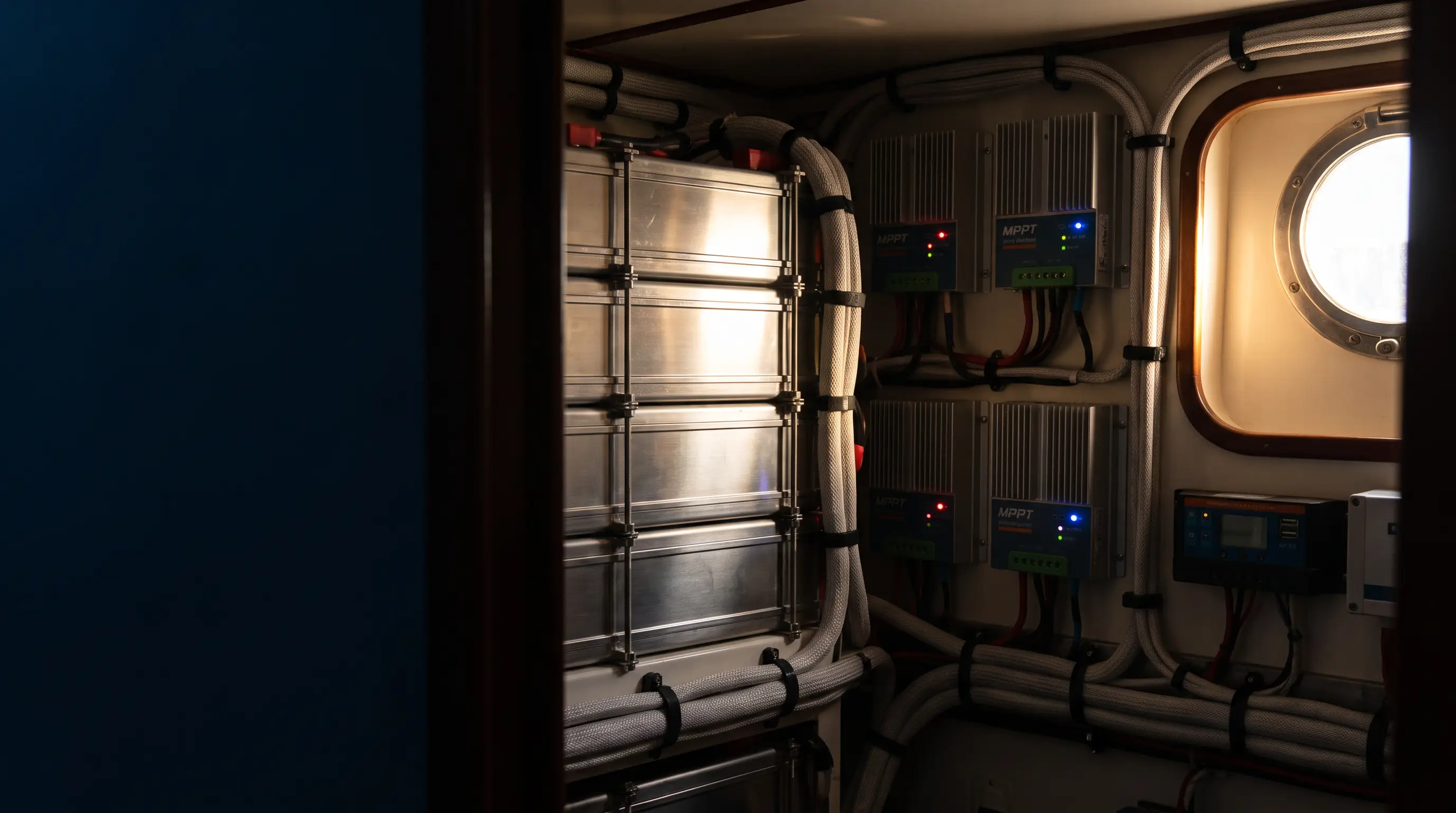
LiFePO4 lithium battery banks, high-output alternators, solar arrays, wind generators, smart charging, inverters, and energy monitoring, engineered as one integrated power system, not a collection of parts. This is the discipline Coastal Current is built around.
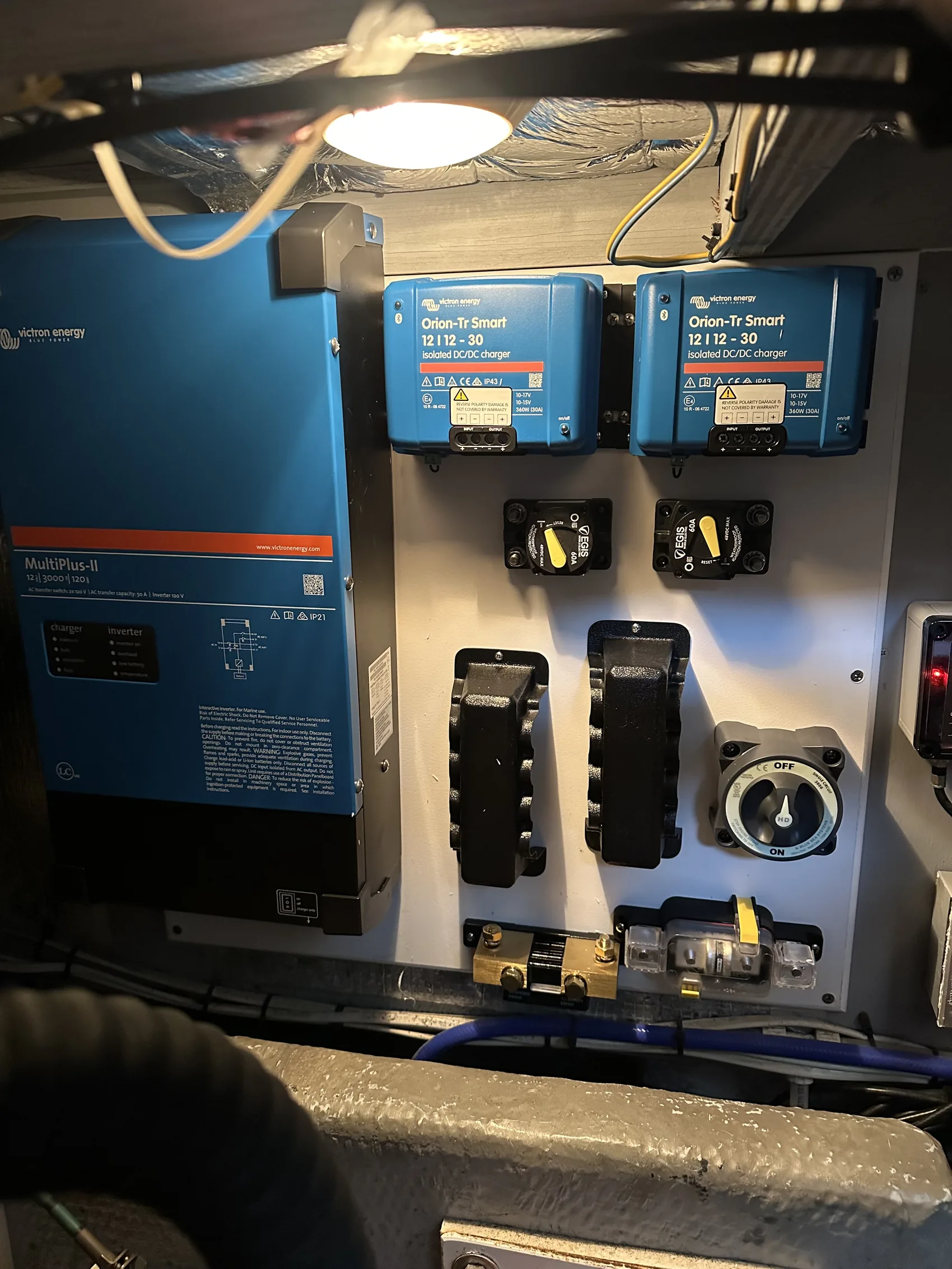
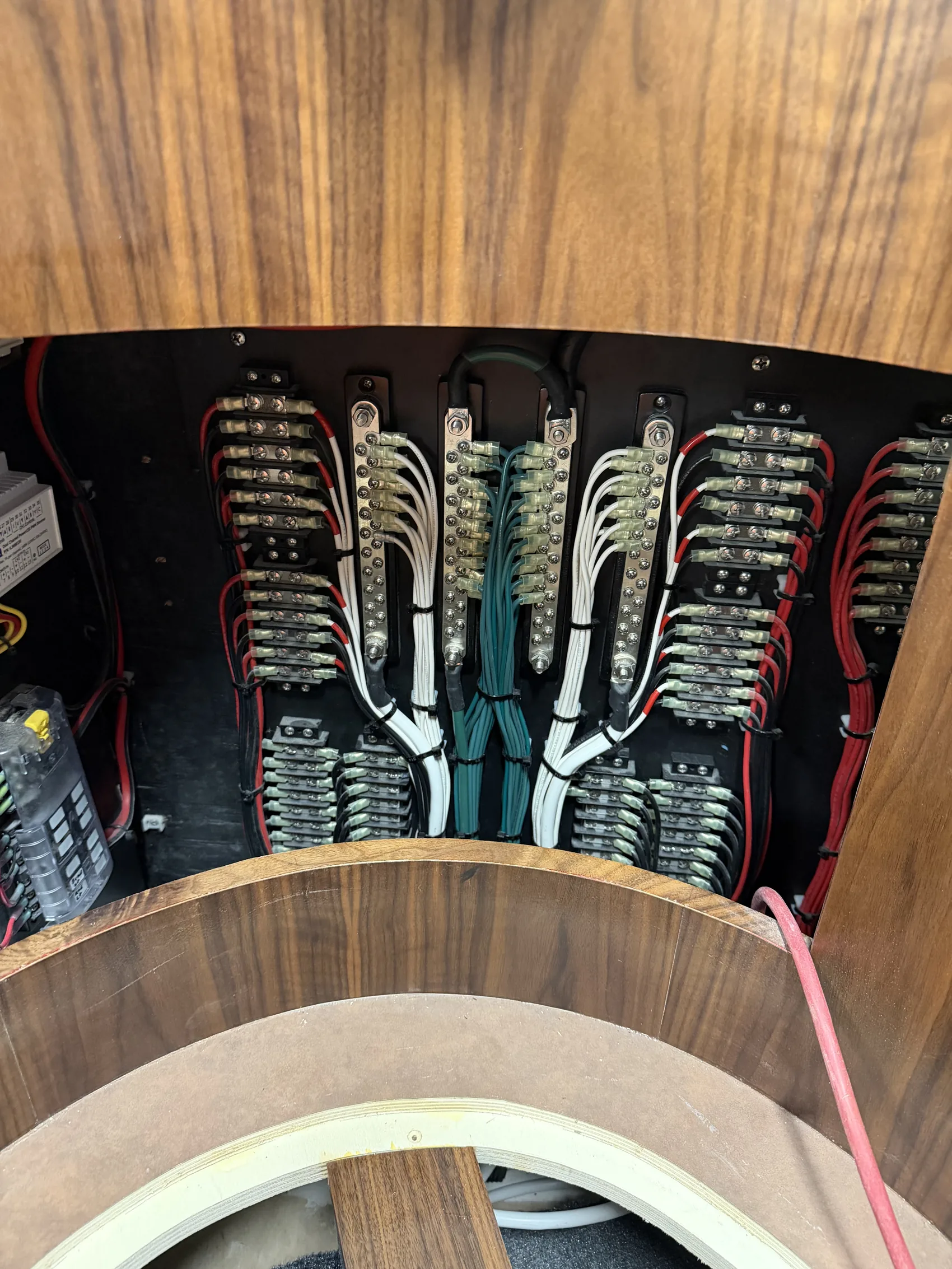
Longer time away from the dock, less generator dependence.
A properly engineered lithium bank paired with the right combination of alternator, solar, and shore charging changes what a vessel can do without running a generator or plugging in. The goal isn't just bigger batteries. It's a charging strategy sized to how the boat is actually used, with every source working together instead of fighting each other.
Components we design and install
- LiFePO4 lithium battery banks & high-capacity systems
- High-output alternators
- Solar arrays & wind generators
- Smart charging & multi-source charge management
- Inverters & inverter/chargers
- Energy monitoring & integrated power-management components
Reliability and range you can actually see
A lithium bank without proper charge control, monitoring, and protection is a liability, not an upgrade. Every off-grid system Coastal Current installs is built to applicable ABYC standard, with monitoring that shows you state of charge, charge sources, and system health in real time, not a single gauge that only tells you when it's already too late.
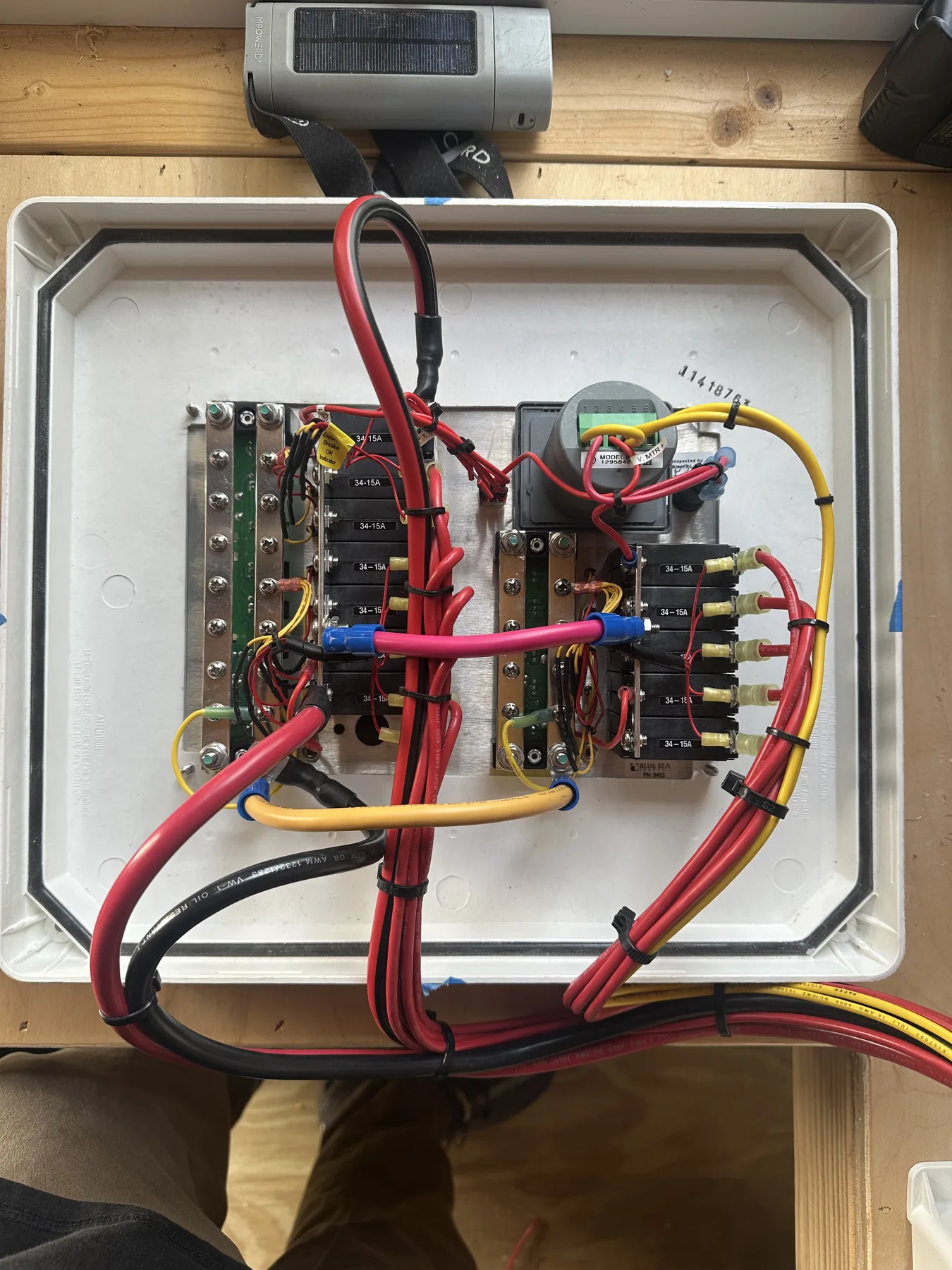
Built around how the boat is actually used, not a spec sheet
A load audit comes first: what actually runs, for how long, and how the boat gets used at anchor or on a passage. Battery capacity, alternator output, and solar array size are chosen to match that pattern, not oversold as a bigger-is-better upgrade or undersized to hit a budget number.
LiFePO4 done to ABYC standard, not just wired in
Disconnects and fusing are sized to the battery's own management system, not just the wire gauge. Mounting, ventilation, and charge-source compatibility, including alternator field control, are matched to how lithium actually behaves, not treated as a drop-in replacement for lead-acid.
Recent power system builds